
AI Chatbots for Attorney Lead Qualification: A Guide
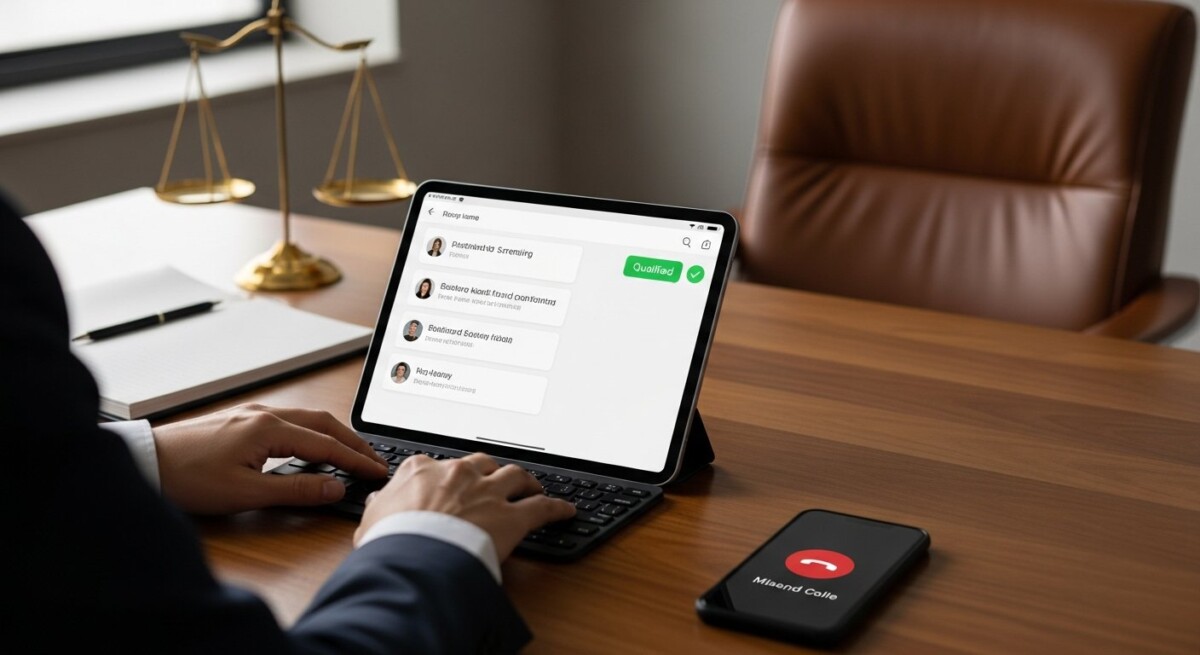
Every law firm knows the frustration of spending hours on the phone with prospects who never retain services. The call comes in, you drop everything, and after twenty minutes of conversation you realize the caller cannot afford your retainer or their case falls outside your practice area. This scenario repeats dozens of times per month, draining billable hours and morale. AI chatbots for attorney lead qualification solve this exact pain point by filtering, scoring, and routing potential clients before a human ever picks up the phone. These systems do not replace the attorney-client relationship. They protect it by ensuring that every interaction starts with a qualified, serious prospect.
Legal marketing has shifted from broad brand awareness to precision targeting. Firms that invest in ai chatbots for attorney lead qualification report conversion rate increases of 30 to 50 percent because their intake team only speaks with people who have already been vetted. The technology has matured beyond simple FAQ bots into sophisticated conversational agents that can assess legal needs, collect case details, check for conflicts of interest, and even schedule consultations automatically. For solo practitioners and boutique firms, this capability levels the playing field against large firms with dedicated intake staff.
How AI Chatbots Qualify Legal Leads in Real Time
Traditional lead qualification relies on web forms and phone screenings. Both methods have high abandonment rates. A prospective client lands on your website at 10 PM on a Saturday. They have a DUI charge and need to know if you handle cases in their county. If no one answers the phone and the contact form asks for fifteen fields, they leave and call the next firm on Google. An AI chatbot engages that visitor immediately, asking natural questions like “What type of legal issue are you facing?” and “Which county did the incident occur in?”
The chatbot uses a decision tree built by your firm. It knows your practice areas, geographic limitations, fee structures, and even your current caseload capacity. As the prospect answers, the bot scores the lead in real time based on criteria you define. A personal injury case with clear liability and medical treatment might score 85 out of 100. A general legal question about neighbor disputes might score 20. The system then either books a consultation for high-scoring leads or politely explains that your firm cannot assist, directing them to a referral resource. This process happens in under three minutes.
For firms exploring this technology, understanding the backend logic is crucial. Many attorneys worry that a bot will miss nuance or sound robotic. Modern legal chatbots use natural language processing (NLP) to understand variations in how people describe their problems. Someone who types “I got a letter from a debt collector” and someone who says “sued by credit card company” trigger the same qualification pathway. The bot also asks clarifying questions when needed, ensuring that no critical detail is lost before the lead reaches your desk.
Key Features to Look for in a Legal Lead Qualification Bot
Not all chatbots are built for the legal industry. A generic customer service bot cannot handle the regulatory and ethical requirements that law firms face. When evaluating solutions, look for capabilities that specifically address attorney needs. The following features separate a useful tool from a costly mistake.
- Conflict of interest screening: The bot should check prospect names and adverse parties against your existing client database before passing the lead forward.
- Practice area routing: If you handle family law and criminal defense, the bot must identify the correct practice area and route the lead to the appropriate attorney or paralegal.
- Appointment scheduling integration: The best systems connect directly to your calendar, allowing qualified leads to book a consultation without back-and-forth emails.
- Data export to your CRM: Every conversation transcript and lead score should flow into your existing case management software automatically.
- Compliance with state bar rules: The chatbot must not give legal advice, and the disclaimers must be clear and visible during the conversation.
These features ensure that the chatbot acts as a true extension of your intake team rather than a barrier between you and potential clients. Firms that skip conflict screening, for example, risk ethical violations if they later take a case against a former client. The bot must also be transparent about being an AI system. A prospect who believes they are talking to a human may feel deceived, which damages trust before the relationship even begins.
When you evaluate vendors, ask for examples of how their bot handles sensitive topics like domestic violence or wrongful death. The conversational tone should be empathetic without being presumptuous. An effective legal chatbot acknowledges the emotional weight of a legal problem while remaining professional and focused on gathering necessary information.
Integrating Chatbots into Your Existing Lead Generation Strategy
An AI chatbot does not replace your other marketing efforts. It amplifies them. If you run pay-per-click campaigns on Google or Facebook, the chatbot becomes the landing page experience that converts clicks into qualified appointments. In our guide on attorney PPC advertising, we explain how ad spend is wasted when visitors bounce without engaging. A chatbot that greets every ad visitor within seconds dramatically improves quality score and reduces cost per acquisition.
The same principle applies to organic traffic. Many law firm websites publish blog content and practice area pages that attract visitors, but those visitors often leave without taking action. By placing a chatbot on every page, you capture leads at the moment of interest. Someone reading about bankruptcy exemptions can instantly ask the bot whether they qualify for Chapter 7 or Chapter 13. The bot answers based on your firm’s criteria and invites them to book a free consultation if they meet the threshold.
For firms that purchase leads from third-party services, the chatbot can serve as a secondary qualification layer. Not all purchased leads are ready to hire. Some are shopping around, and others have unrealistic expectations about fees or timelines. The chatbot asks targeted questions that reveal a prospect’s readiness and budget. Only leads that pass this secondary screen get forwarded to your intake team, saving hours of wasted follow-up calls. This approach works particularly well when combined with the strategies outlined in acquiring bankruptcy attorney leads in Indiana, where geographic and financial qualification is especially important.
Measuring the ROI of Lead Qualification Automation
Attorneys are naturally skeptical of new technology until they see hard numbers. The ROI for an AI lead qualification chatbot can be measured across several clear metrics. First, track the number of conversations initiated per month versus the number of human intake calls you previously handled. A typical firm sees a 400 percent increase in intake conversations because the bot works 24/7 without breaks or weekends.
Second, measure the conversion rate from conversation to consultation. If your previous conversion rate was 20 percent and it rises to 35 percent after implementing the chatbot, the improvement directly correlates to better qualification. Third, calculate the time saved. Record how many hours your paralegals or attorneys spent on unqualified calls before the bot. Multiply that by your hourly rate. For many firms, the chatbot pays for itself within the first two months.
Fourth, track the lifetime value of clients acquired through the chatbot versus other channels. Because the bot qualifies thoroughly before scheduling, the leads tend to be more serious and more likely to retain services. One family law firm reported that clients who booked through their chatbot had a 40 percent higher average retainer than clients who called directly. The bot’s questions about income, assets, and the complexity of the case naturally attracted prospects who understood the value of legal representation.
For firms handling Chapter 13 bankruptcy cases, the qualification process is particularly nuanced. Debtors must meet specific income and expense thresholds, and the timing of the filing matters. A chatbot that asks about disposable income and recent tax returns can pre-qualify prospects before they ever speak to an attorney. This approach is detailed further in acquiring high quality Chapter 13 attorney leads, where lead quality directly impacts case acceptance rates and firm profitability.
Ethical Considerations and Compliance Requirements
State bar associations are still catching up to AI technology, but the existing rules of professional conduct apply. An AI chatbot must not engage in the unauthorized practice of law. This means the bot cannot analyze a set of facts and recommend a specific course of action. It can gather information, explain your firm’s services, and schedule consultations. The line between information and advice must be drawn clearly in the bot’s code and disclaimers.
Confidentiality is another critical concern. The chatbot collects personal details about legal problems, finances, and sometimes medical history. The platform you choose must encrypt all data in transit and at rest. Additionally, the chatbot should inform prospects that their conversation is not protected by attorney-client privilege until a formal engagement letter is signed. This warning should appear at the start of every conversation.
Some jurisdictions require that any automated system used for client intake be reviewed by an attorney for compliance. Before launching your chatbot, have your ethics counsel or bar association review the script and decision tree. Keep records of every conversation for at least the duration required by your state’s record retention rules. These logs can serve as evidence that the bot did not cross ethical boundaries if a complaint ever arises.
Finally, consider accessibility. The chatbot must comply with the Americans with Disabilities Act (ADA) and similar state laws. This means it should work with screen readers, offer text-to-speech options, and provide an alternative method for users who cannot or will not use a chatbot. A simple phone number prominently displayed on the chatbot window satisfies this requirement while also giving prospects a human option if they prefer it.
Choosing Between Custom-Built and Off-the-Shelf Solutions
Law firms have two primary paths for implementing an AI lead qualification chatbot. The first is a custom-built solution developed by a legal technology company. These bots are tailored to your specific practice areas, intake workflow, and state-specific regulations. They cost more upfront but offer deeper integration with your case management software and greater control over the conversation flow.
The second option is a white-label or SaaS chatbot designed for legal professionals. These platforms provide templates for common practice areas, and you customize the questions and routing rules through a dashboard. They are faster to deploy and typically cost a fraction of custom development. The trade-off is less flexibility. If your firm has a unique intake process or handles niche areas of law, an off-the-shelf bot may not capture all the relevant details.
For most solo and small firms, an off-the-shelf solution with strong legal-specific features is the right choice. The key is to select a vendor that understands legal marketing and has experience working with firms in your practice area. Ask for references from firms similar to yours. A chatbot that works well for a personal injury mill may not suit a boutique estate planning practice. Test the bot yourself by going through the conversation flow as a prospect. Identify any gaps where the bot fails to ask an obvious follow-up question or where the language feels too robotic.
When you are ready to deploy, start with a pilot period of 30 days. Monitor the conversations daily during the first week to catch any errors or misunderstandings. Adjust the decision tree based on real interactions. Prospects will ask unexpected questions, and the bot’s responses must be refined over time. This iterative process is normal and results in a bot that feels increasingly natural to users.
Frequently Asked Questions
Will an AI chatbot replace my intake paralegal?
No. The chatbot handles the initial screening and qualification, but complex cases still require human judgment. Paralegals and attorneys review the bot’s transcripts and make final decisions about case acceptance. The bot frees your team to focus on high-value tasks rather than answering the same five questions repeatedly.
How much does a legal chatbot cost?
Pricing varies widely. Basic SaaS solutions start around $200 per month. Custom-built systems can cost $5,000 to $20,000 to develop plus monthly maintenance. Most firms recoup the investment within three to six months through increased conversions and reduced intake labor.
Can the chatbot handle multiple languages?
Yes, many legal chatbots support Spanish, Mandarin, and other languages commonly spoken by your target audience. Multilingual capability is essential if you serve diverse communities. Ensure the bot’s legal disclaimers are also translated accurately.
Does the chatbot integrate with my existing CRM?
Most legal-specific chatbots offer integrations with popular CRMs like Clio, MyCase, and PracticePanther. Confirm compatibility before purchasing. If your firm uses a custom CRM, a custom-built bot may be necessary.
What happens if a prospect refuses to talk to a bot?
The bot should always offer a clear option to speak with a human. A prominent button labeled “Speak to a real person” or “Call us now” preserves the prospect’s choice. Some people prefer voice calls, and forcing them through a chatbot will lose the lead. Provide your phone number and a callback request form within the chatbot interface.
For firms that also invest in broader digital strategies, the chatbot becomes a central component of your online presence. Combined with attorney internet advertising, the system creates a seamless path from ad click to booked consultation. The technology is not a futuristic luxury. It is a practical tool that protects your time, improves client experience, and grows your practice without adding overhead.
Implementing AI chatbots for attorney lead qualification requires upfront planning but delivers lasting returns. The firms that adopt this technology now gain a competitive advantage in a market where speed and responsiveness determine who gets the client. Start by auditing your current intake process. Identify the questions you ask every single caller. Convert those into a chatbot script. Test it. Refine it. Within a few weeks, you will wonder how you managed without it. Your phone will still ring. But when it does, you will know the person on the other end is ready to hire.